As COP31 approaches, the central challenge is no longer simply securing new climate commitments, but ensuring their effective implementation through adequate finance, institutional mechanisms, and accountability.
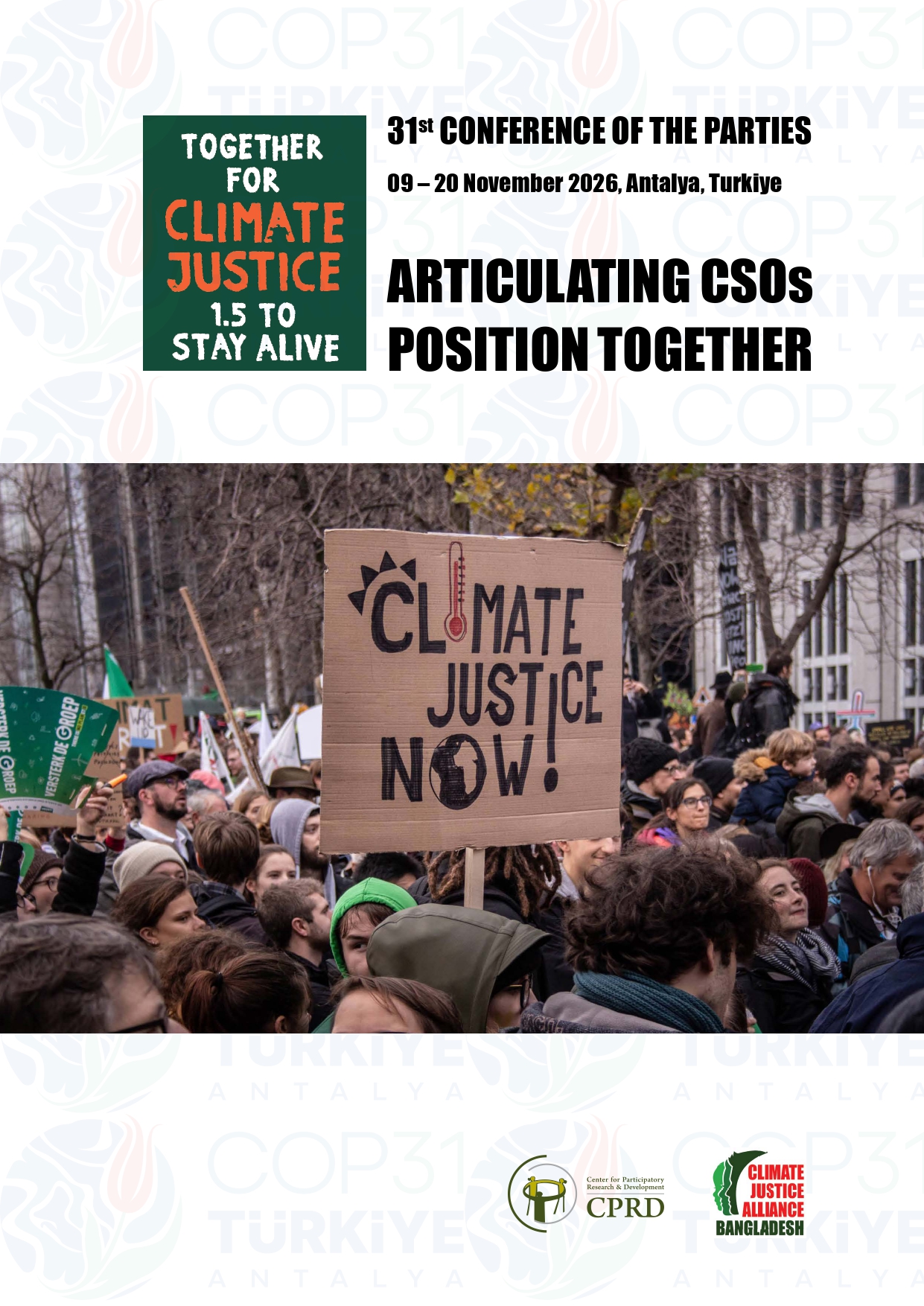
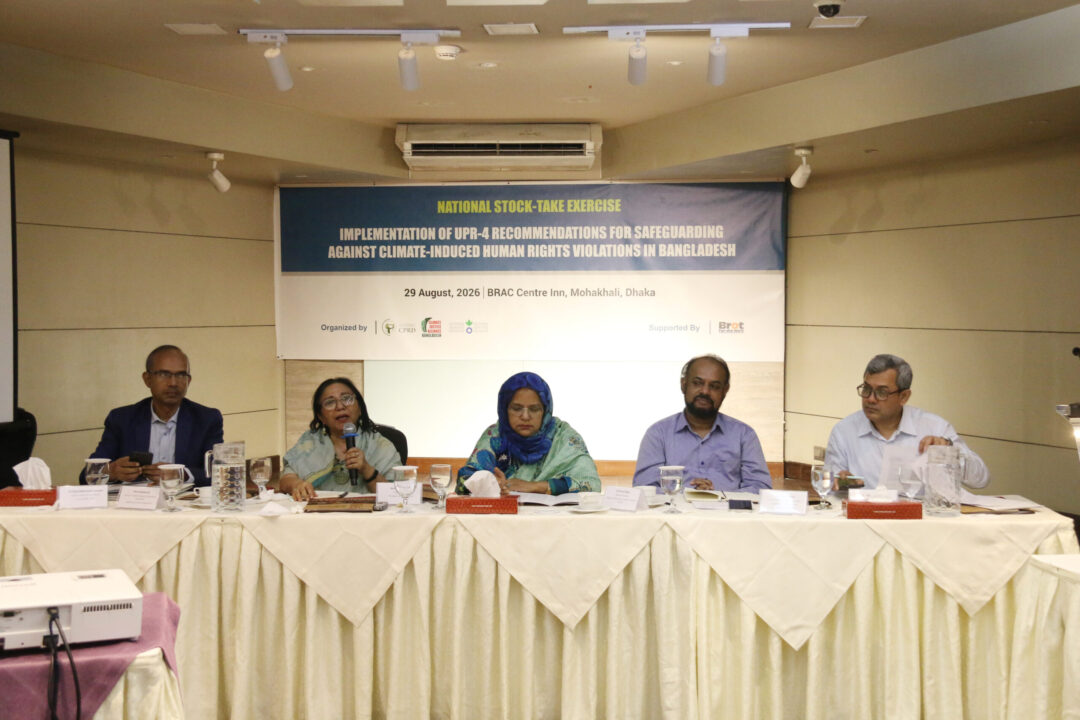
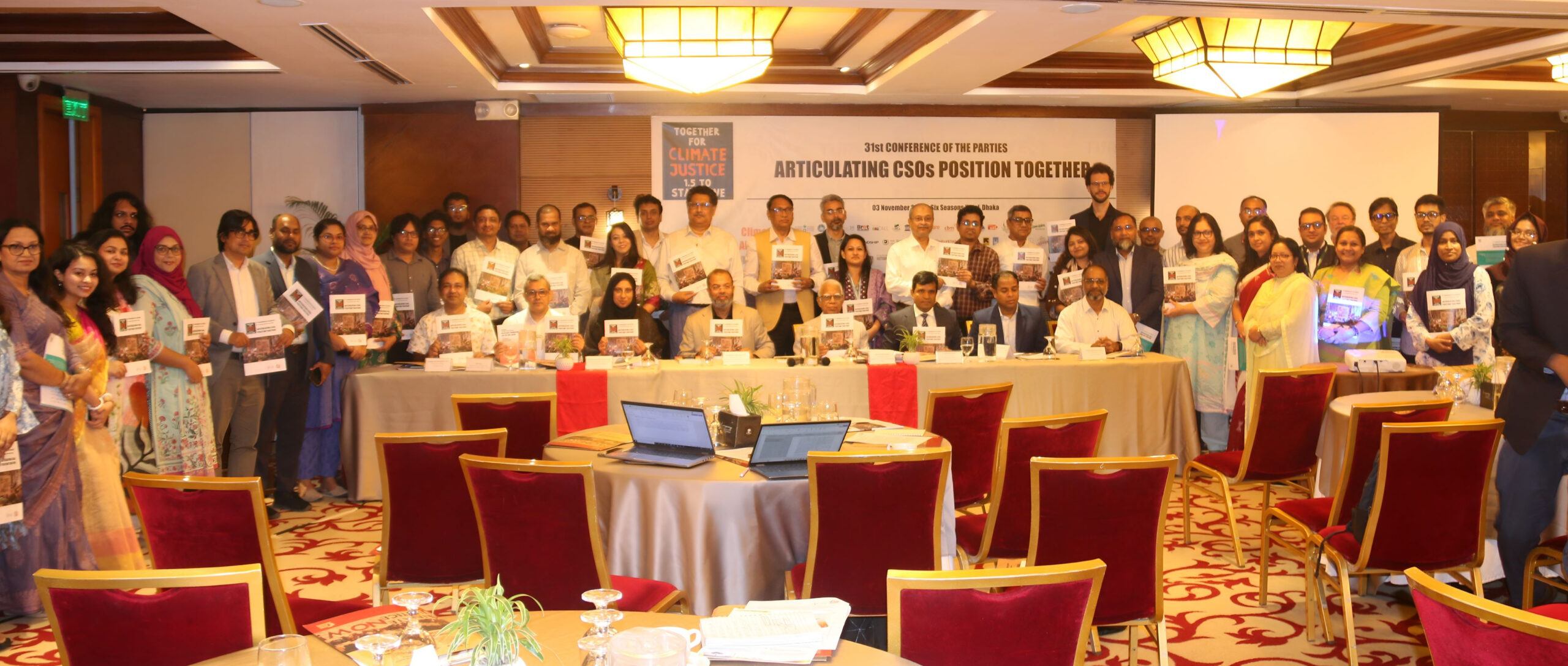
Against this background, over 50 CSOs in Bangladesh convened in a high-level National Seminar titled “31st Conference of the Parties: Articulating CSO Position Together” hosted by the Center for Participatory Research and Development-CPRD and Climate Justice Alliance-Bangladesh (CJA-B) on 3 November 2026 at Six Seasons hotel, Dhaka. The seminar featured unwrapping of the “CSO Position Paper for COP31” developed by Climate Justice Alliance-Bangladesh (CJA-B) and expert opinions on the priorities that must guide negotiations at COP31 in Antalya, Turkey.
Key demands include:
- Mitigation and the 1.5°C Goal: Close the ambition and implementation gaps in NDCs 3.0, operationalize the Global Implementation Accelerator, and translate the Belém Mission to 1.5 into actionable implementation pathways.
- Adaptation: Provide adequate, predictable, and accessible grants-based finance and other supports to operationalize GGA indicators and implement the GGA framework; move NAPs from planning to funded implementation, and address transboundary climate risks.
- Loss and Damage: Ensure adequate capitalization of the FRLD, operationalize direct access and rapid-disbursement mechanisms, and strengthen institutional coordination to address economic and non-economic losses.
- Climate Finance: Establish a credible, needs-based financing pathway with predictable, accessible, and predominantly public and grant-based support, while strengthening developed countries’ obligations under Article 9.1 of the Paris Agreement.
- Article 6: Strengthen environmental integrity, transparency, safeguards, and accountability under Article 6 and ensure Article 6 supplements rather than substitutes for domestic mitigation.
- Just Transition and Trade: Operationalize a rights-based, adequately financed Just Transition Mechanism and prevent climate-related trade measures from shifting decarbonization costs to developing countries.
- Equity, Inclusion, and Human Rights: Translate Gender Action Plan into funded action, strengthen human rights protections, recognize climate-related human mobility as a systemic risk, and ensure meaningful participation of youth, children, and persons with disabilities.
Equally important are stronger implementation mechanisms for the Global Stocktake outcomes and enhanced protection of forests, oceans, and biodiversity and their integration into national priorities.


For Bangladesh and other climate-vulnerable developing countries, COP31 must deliver more than negotiated commitments. It must establish credible pathways for implementation, ensure equitable access to finance and technology, and place the rights and needs of vulnerable communities at the center of climate action.
The transition from commitment to climate justice must be reflected in measurable outcomes, not merely political declarations.
Read the position paper at: https://cprdbd.org/wp-content/uploads/2026/11/COP-31-Position-Paper.pdf