14 November 2026
Antalya, Türkiye
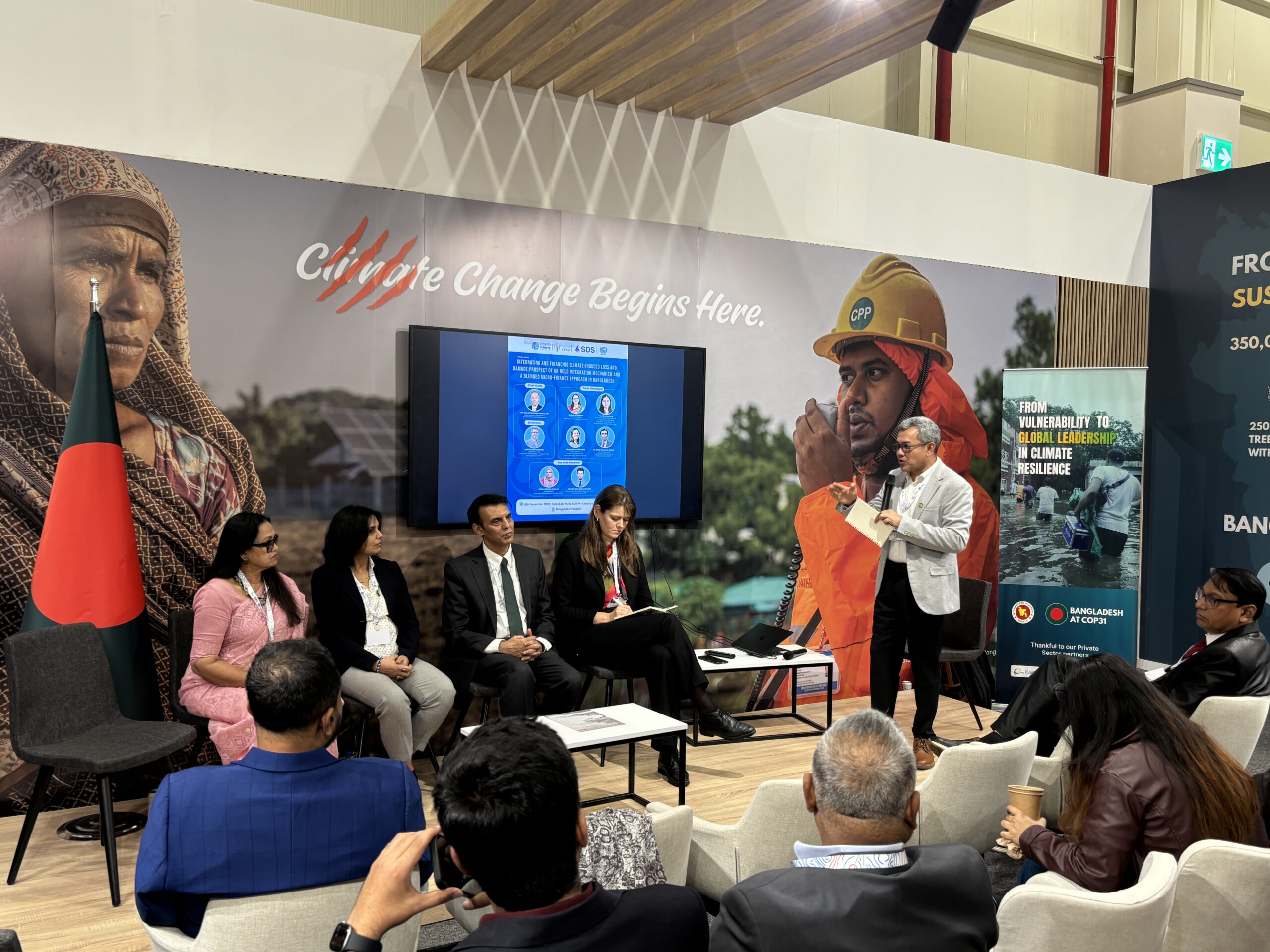
The Center for Participatory Research and Development (CPRD) organized a press conference titled “From Shared Vulnerability to Resilience in BBN: Advancing Adaptation and Finance Priorities at COP31” on 14 November 2026 at Press Conference Room 2 of the COP31 venue in Antalya, Türkiye. The event brought together representatives, climate experts and civil society actors from Bangladesh, Bhutan and Nepal (BBN) to advocate for vulnerability-centred adaptation and equitable access to climate finance.
The discussions highlighted the interconnected climate vulnerabilities of the BBN countries, spanning Himalayan glacier retreat, changing monsoon patterns, transboundary flooding, sea-level rise and salinity intrusion. Speakers emphasized that these cascading risks require coordinated regional adaptation efforts and sustained international support beyond conventional country-based approaches.
Moderating the event, Md. Shamsuddoha, Chief Executive of CPRD, stressed that graduation from Least Developed Country (LDC) status does not signify graduation from climate vulnerability. He called for continued access to predictable, accessible and grant-based climate finance based on countries’ actual and projected vulnerabilities.
Presenting the keynote paper, Sheikh Nur Ataya Rabbi, Programme Manager–Research and Advocacy at CPRD, provided an analytical overview of shared climate vulnerabilities and macroeconomic fragility of the BBN and underscored the importance of advancing a collective BBN adaptation and climate finance agenda through coordinated regional advocacy.
The discussion featured Dr. Shah Abdul Saadi, Joint Secretary, Economic Relations Division, Ministry of Finance, Bangladesh; Manjeet Dhakal, Director, Climate Analytics South Asia; Md. Ziaul Haque, Additional Director General (PRL), Department of Environment, Bangladesh; and Ruchi Chaudhary, Programme Manager, Climate Action Network South Asia (CANSA). Speakers emphasized strengthened transboundary cooperation, improved vulnerability assessments, accessible early warning systems, locally led adaptation and equitable climate finance beyond LDC graduation.
The press conference concluded with three key policy priorities: placing vulnerability, equity and human rights at the center of adaptation negotiations; ensuring adequate, predictable and grant-based adaptation finance beyond LDC graduation; and strengthening coordinated BBN advocacy and cooperation on shared climate risks. Participants called on governments, civil society organizations and international partners to advance an equitable global adaptation framework that recognizes climate vulnerability irrespective of development classifications, ensuring that development progress does not become a barrier to climate resilience.