Antalya, Türkiye | 12 November 2026
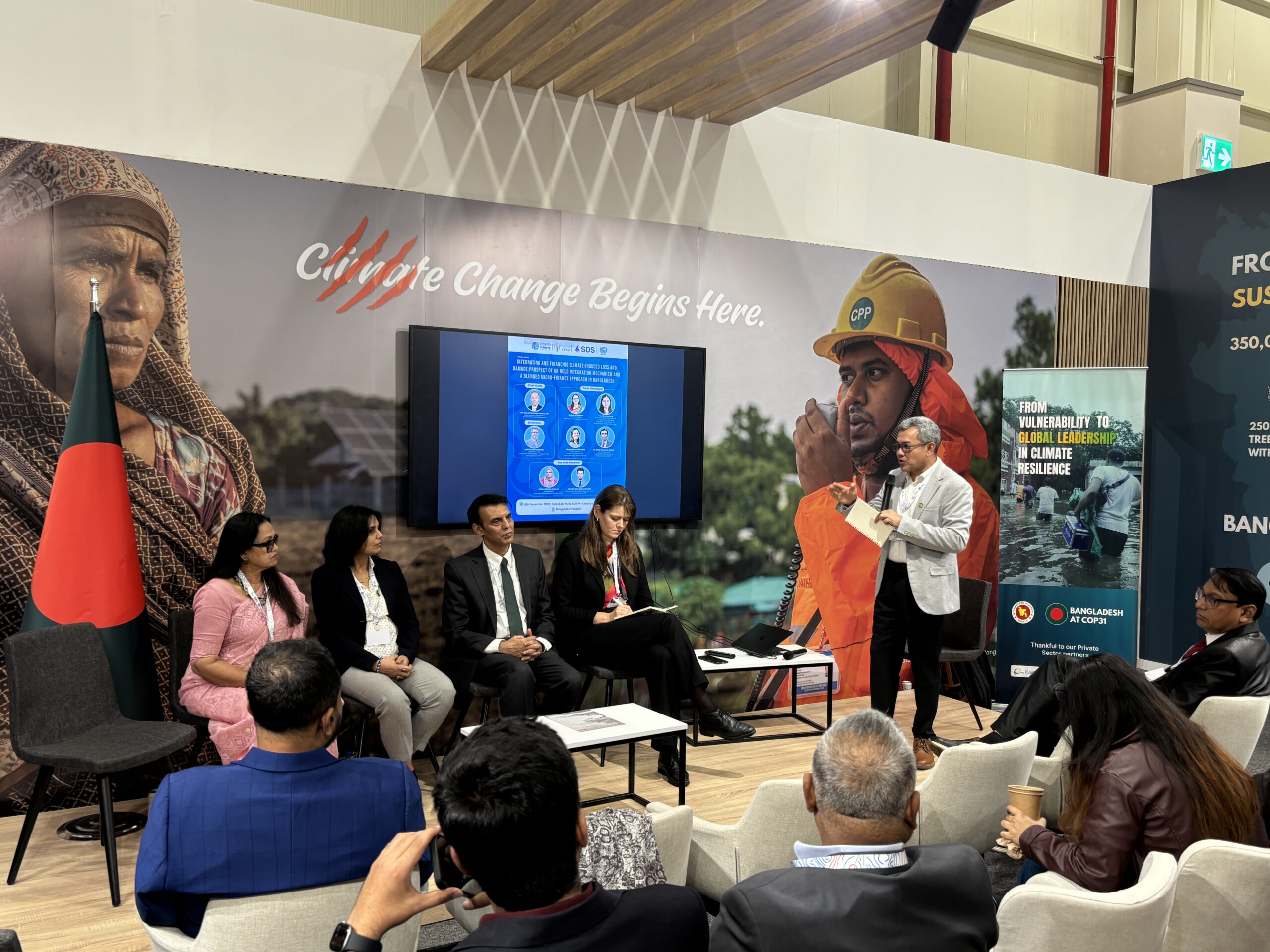
The Center for Participatory Research and Development (CPRD) and Shariatpur Development Society (SDS) jointly organized a side event today titled “Integrating and Financing Climate-induced Loss and Damage: Prospect of an NELD Integration Mechanism and a Blended Microfinance Approach in Bangladesh” at the Bangladesh Pavilion during COP31 in Antalya, Türkiye.
The event explored practical approaches to addressing climate-induced loss and damage at the community level, focusing on integrating non-economic loss and damage (NELD) into institutional practices and improving access to financing for vulnerable households through blended microfinancing approaches.
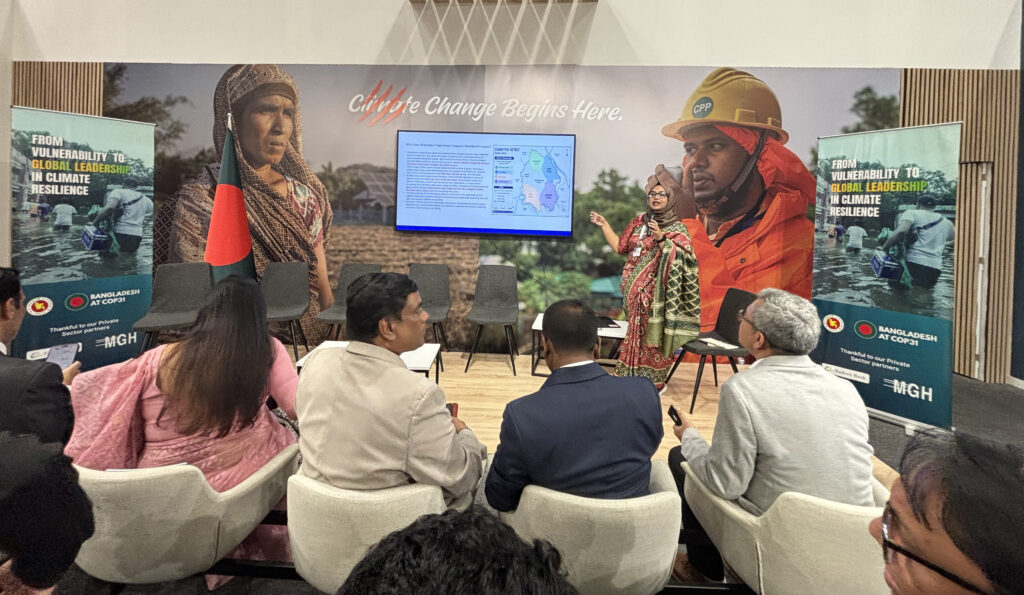
In the first keynote presentation, Adiba Bintey Kamal, Coordinator of SDS, introduced an institutional framework for systematically integrating NELD into development interventions, drawing on experiences from riverbank erosion-affected communities in Shariatpur. The framework highlighted practical pathways for recognizing and addressing intangible losses through institutional policies, project design, implementation, and monitoring.
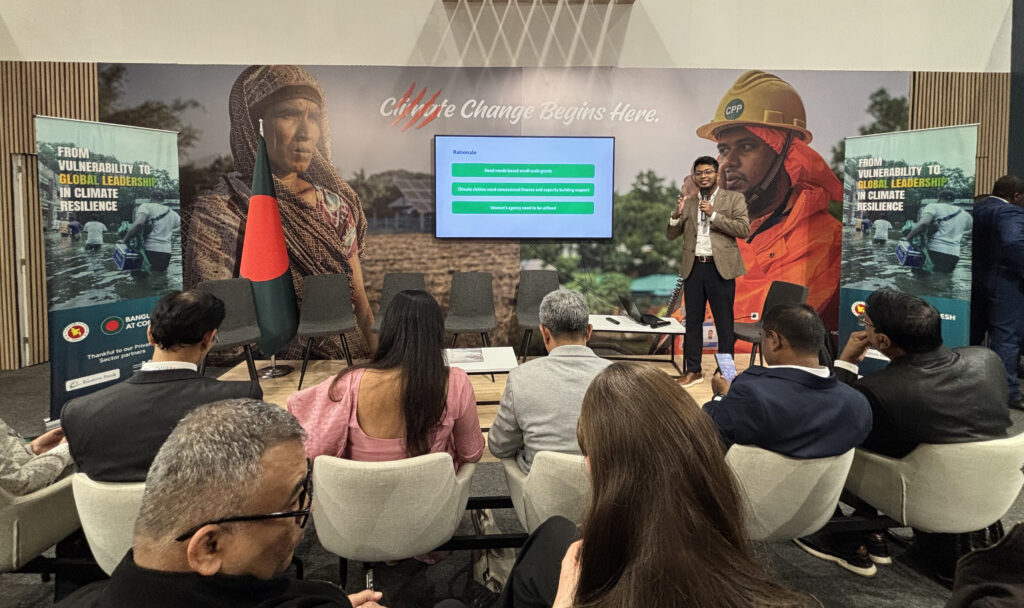
In the second keynote presentation, Sheikh Nur Ataya Rabbi, Program Manager of CPRD, shared evidence from a pilot blended microfinance approach in Kurigram, demonstrating its potential to support livelihood recovery, women’s economic agency, and household climate resilience. He also proposed an improved financing mechanism combining public resources and microfinance institutions to facilitate accessible and affordable recovery financing.
The expert panel featured Rabeya Begum, Executive Director of SDS; Ritu Bharadwaj, Director at the International Institute for Environment and Development (IIED); Magdalena Mirwald, Policy Advisor at Germanwatch; and Dr Abid Qaiyum Suleri, Executive Director of the Sustainable Development Policy Institute (SDPI). Mr Sheikh Faridul Islam, MP, State Minister for Environment, Forest and Climate Change, attended as Chief Guest, while Md Shamsuddoha, Chief Executive of CPRD, moderated the event.
The expert discussions strongly emphasized that non-economic losses often impose greater and more enduring burdens on affected communities than measurable economic losses. Without adequately recognizing and integrating NELD into the loss and damage architecture, climate responses remain fundamentally incomplete. Experts further stressed that assessing and quantifying NELD must account for the values and perceptions that affected individuals and communities attach to particular losses, which vary considerably across contexts.
The discussions also highlighted the persistent injustice in climate finance. Climate-vulnerable households often spend many times more on recovery than the support they receive, frequently sacrificing essential expenditures to cope with climate-induced losses. This places an unjust burden on communities that have contributed least to the climate crisis.
Experts expressed concern that developed countries’ continued retreat from grant-based climate financing is compelling vulnerable countries to explore alternative mechanisms that often repackage loans as climate finance. While innovative financing approaches may help address immediate resource constraints, they cannot substitute for grant-based support. The discussions reaffirmed that climate justice requires adequate, predictable, and accessible grant financing for loss and damage, and that vulnerable communities have a legitimate right to demand such support. The event underscored the importance of combining practical, locally led solutions with stronger international financing commitments to ensure comprehensive, equitable, and rights-based responses to climate-induced loss and damage.