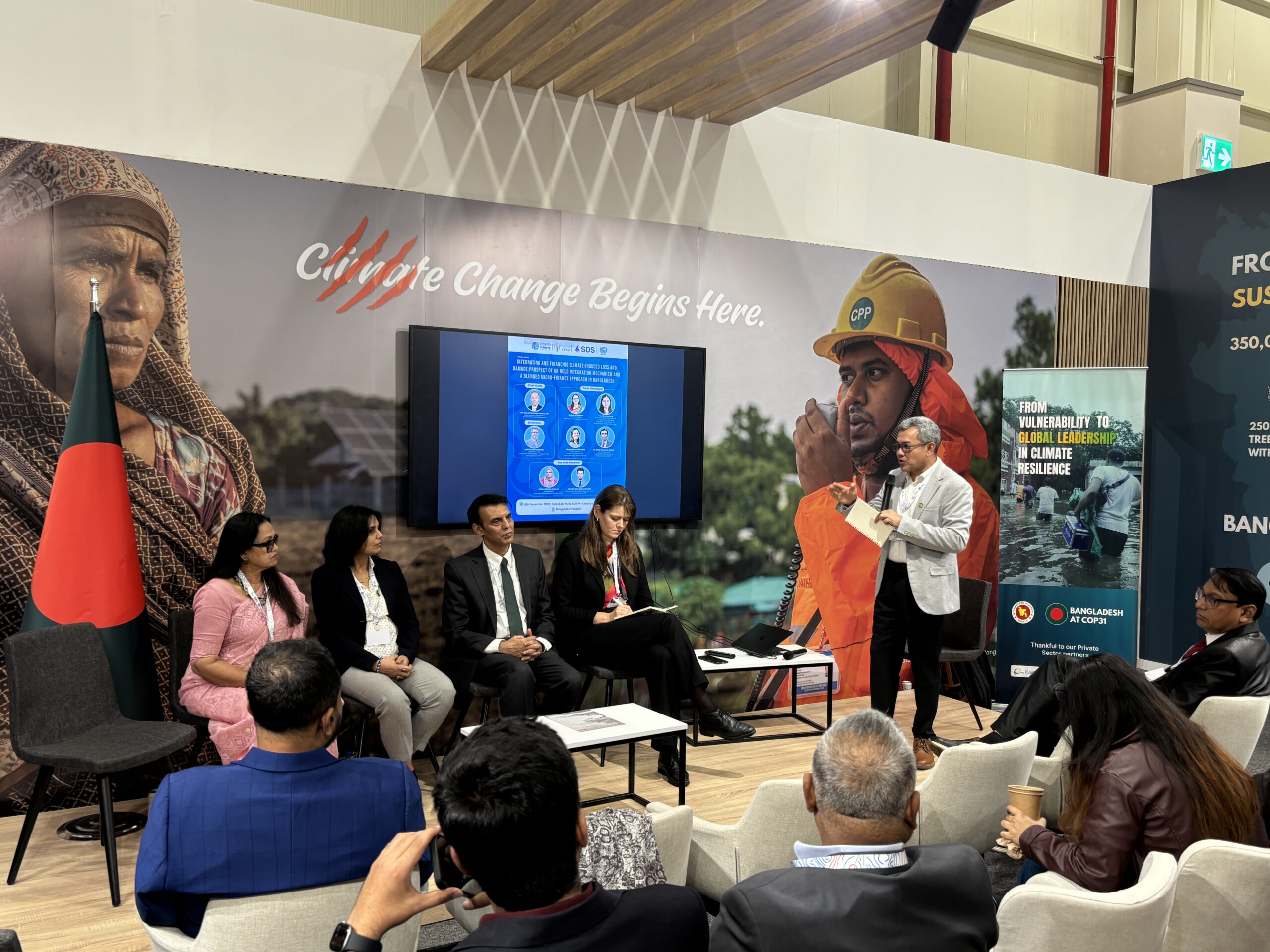
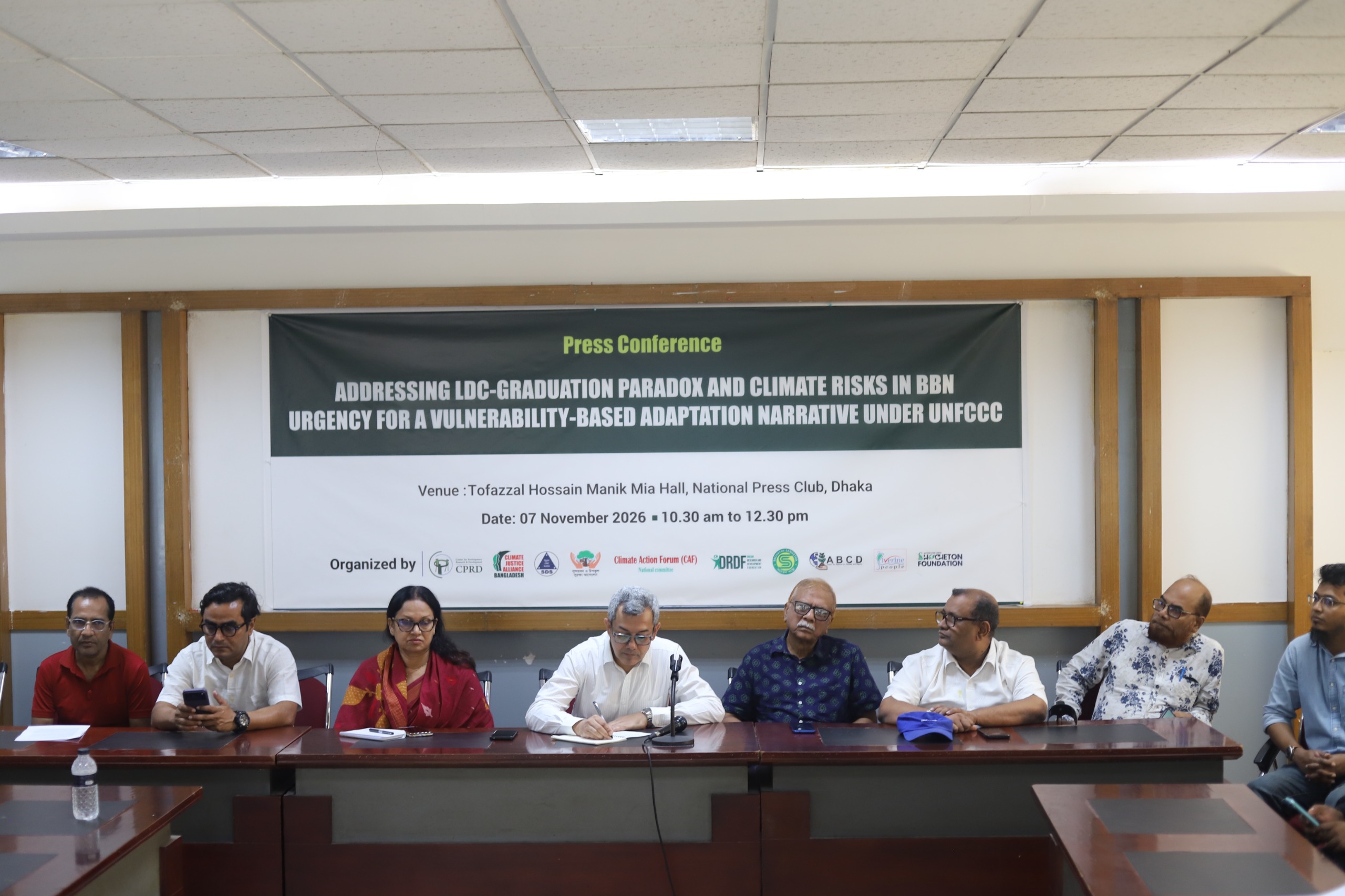
CPRD, in collaboration with Christian Aid and Gana Unnayan Kendra (GUK), organized a seminar titled “Addressing Climate-Induced Loss and Damage (L&D) with Scalable and Sustainable Solutions: Learning from a Blended Microfinance Model” on 30 April 2025 at Lakeshore Heights, Dhaka to share the outcomes of a pilot “Blended Microfinance Approach” that combines blended micro-finance (grants plus concessional microcredit) and IGA training support to address climate change-induced L&Ds at community level. High level officials from different relevant government and non-government organizations, such as DoE, PKSF, Start Network, Care Bangladesh, Water Aid, Conern Worldwide, etc. spoke at the event. Heads and Senior professionals from CSOs and NGOs working in the fields of climate change, microfinance, humanitarian supports, gender rights, etc. also were present and contributed to the interactive discussion towards exploring the potentials of blended microfinance approach in enhancing climate resilience at the community level.

This financing approach was piloted over a period of around 10 months with a group of climate change-affected families in Rowmari and Rajibpur upazillas of Kurigram district— a highly flood prone area— and generated some crucial outcomes having significant implications for community resilience to climate change. To mention a few, the intervention has caused the per-capita monthly family income to go up by BDT 844, a rise in females’ monthly income by BDT 981, increase of per- capita family savings by BDT 1562. The intervention has also been found to have a positive impact on the access to food and females’ access to decision-making. Importantly, dependency on climate- sensitive livelihoods and the barriers to adaptation have decreased, while the extent of recovery from climate-induced L&Ds and resilience to future climate shocks have significantly increased thanks to the intervention.
- Based on the findings presented and the theoretical framework of the approach, the speakers highlighted several needs and steps forward. Specifically, they pointed that:
- Blended microfinance is highly relevant for rural Bangladesh, particularly for DRM activities, with grant-based funds diminishing; scalable and replicable financial models are urgently needed;
- Micro-level initiatives need to be linked with macro-level policy frameworks;
- NGOs must act as facilitators to strengthen the ecosystem of finance for climate-resilience, with a focus on better utilizing women’s skills and natural resources;
- Microfinance packages need to be redesigned considering the dynamics of climate risks, local contexts and needs of the marginal people, with due flexibility in operations;
- Greater focus is needed on revenue generation through climate-smart practices; financial and technical support should be rolled out for risk-informed planning to enhance community resilience;
- Asset diversification is urgently needed for building resilience and reducing vulnerability to climatic shocks;
- Multi-stakeholder approach to climate finance delivery at the grassroots level needs to be promoted;
- Sustainable financing mechanisms that combine grants with other forms of support should be innovated and fostered to address L&Ds from disasters;
The discussants considered the “Blended Finance Approach” a promising initiative to address L&Ds at micro level and recommended for experimenting the approach in other areas and contexts with tailored supports. They further stressed exploring scopes of partnership-based approaches, especially, with engagement of private sector as a key partner, to address climate crisis at the community level.
The event was chaired by Dr. M. Asaduzzaman, Former Research Director at Bangladesh Institute of Development Studies (BIDS), and hosted by Md Shamsuddoha, Chief Executive at CPRD. Ms. Nuzhat Jabin, Country Director of Christian Aid, concluded the seminar, highlighting the potentials of strategic integration of grants with credit for fostering inclusive and sustainable development, in vulnerable regions.