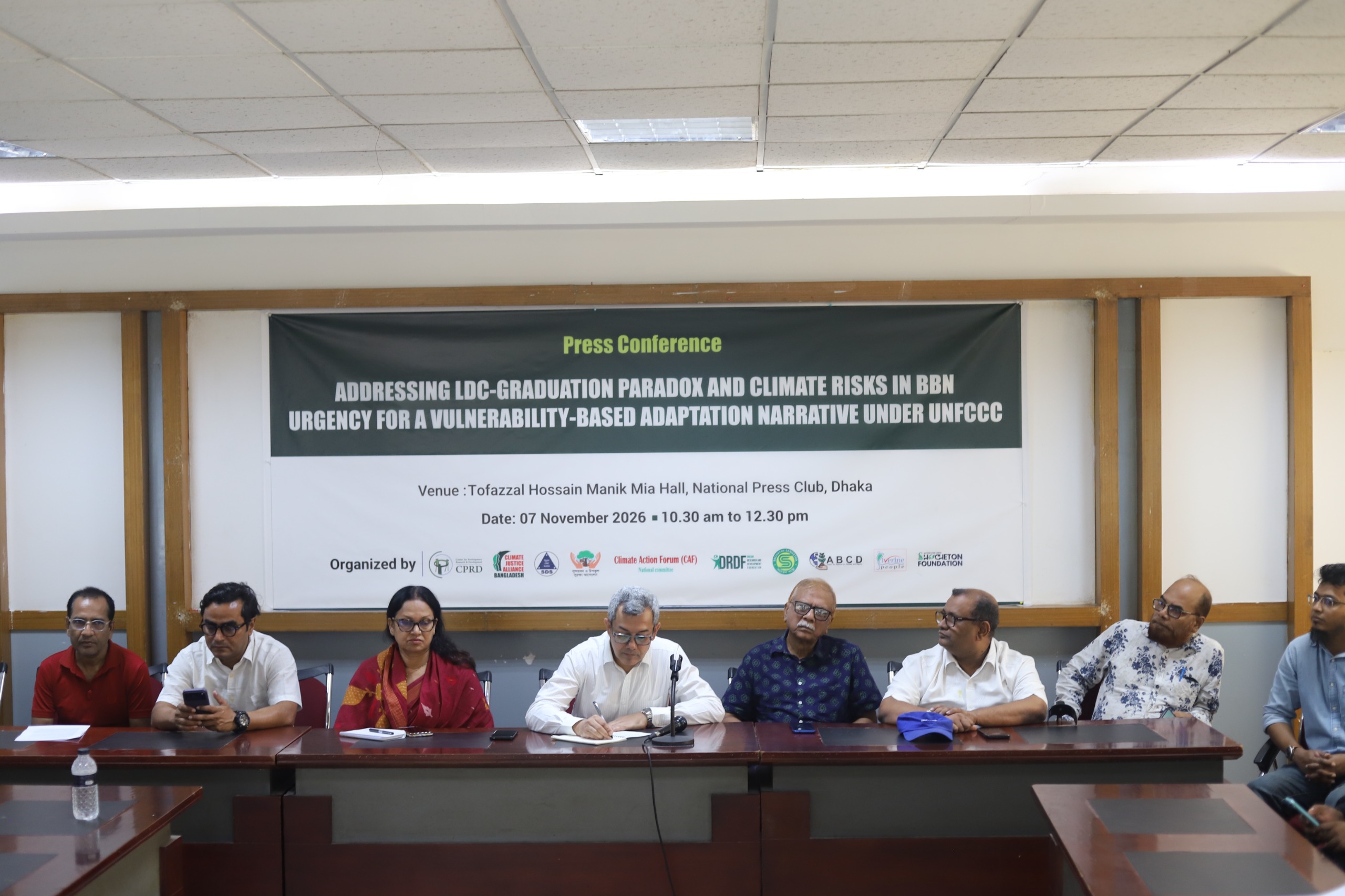
A seminar titled ‘Safeguarding Peoples’ Rights in Development Projects: Disclosure and Reality’ was held today at 10 AM at Capital Dhaka’s Reporters’ Unity’s Nasrul Hamid auditorium. It was organized by the Centre for Participatory Research and Development (CPRD), Diakonia and ‘Reality of Aid- Asia Pacific’. The seminar was chaired by Mr. Md Shamsuddoha, Chief Executive of CPRD. As spatial guests, there were Mr. Mihir Biswas, Joint Secretary of BAPA, Mr. Aminur Rasul, Executive Director of Unnoya Dhara Trust, Mr. Mohammad-Shahjahan, Director of YPSA and Nikhil Chandra Bhadra, Senior Journalist of Kalerkantho. The research findings were presented by CPRD’s Research and Advocacy Officer, Mr. Al Imran. Many other government officials and CSOs joined the discussion.
As the chair of the event, Md Shamsuddoha said that it’s appreciable how, as a developing country, Bangladesh is initiating and implementing many small and mega-scale projects with its limited capacity. The level of expected service from a project depends on whether the project has been implemented according to the plan, the management of the project and its maintenance and operations. Suppose there is no opportunity for the project beneficiaries to participate in the implementation and monitoring stage, the projects don’t succeed. Unfortunately, participation of the stakeholders in the ‘Sustainable Water Supply Project” and “Dhaka-Sylhet Road expansion Project’ was not appreciable. Also, focus on the environmental impact of the projects or any alternative plans as compensation was not noticed either. If a sustainable life and livelihood for the affected people of the project location is not guaranteed, the discrimination between city and village will keep increasing; which basically goes against the National Development Policy.
Reflecting on the study findings, Mr Mihir Biswas, Joint Secretary of BAPA, said that the development would not bring benefit to all if equal development is not ensured. He also said development projects should be taken very carefully for such a climate-afflicted country like Bangladesh.
Mr. Aminur Rasul said, Rivers and water bodies are the lifeline of Bangladesh, and we CSOs are always against grabbing and contaminating water bodies. This research shows the ‘Sustainable Water Supply Project” and “Dhaka-Sylhet Road Expansion Project’ does not consider the conservation of the water bodies. The time is running out to protect the lifeline of Bangladesh, he added.
Mr. Nikhil Chandra thanked CPRD for this insightful research work which will guide the development activities in the right and accurate track. We must not expect unsustainable development activities that will darken our future in the long run, he added. Seeking attention of CPRD, he further added, “This research work should not be halted at this stage and its findings need to be disseminated to the policy making level.”
Mr. Md. Shahjahan said we civil society are not against development. We want the development activities would progress in full swing but these should not be a threat to our future. He also thanked CPRD for this timely research work.
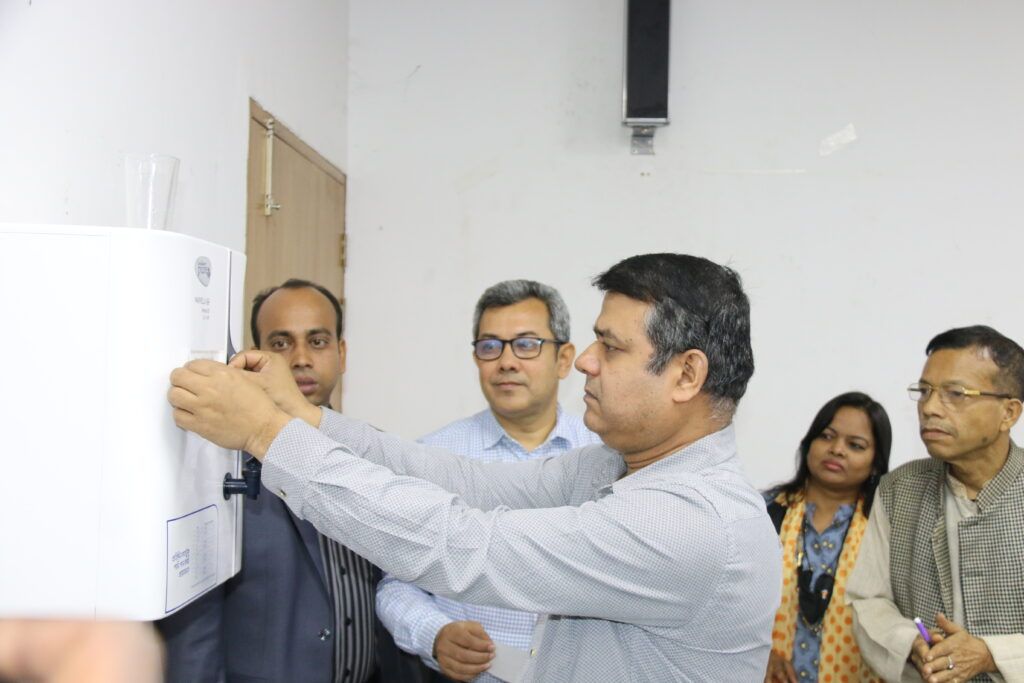
After the end of the event, a water purifier was handed over to DRU from CPRD to discourage single use plastic bottles in Nasrul Hamid auditorium.