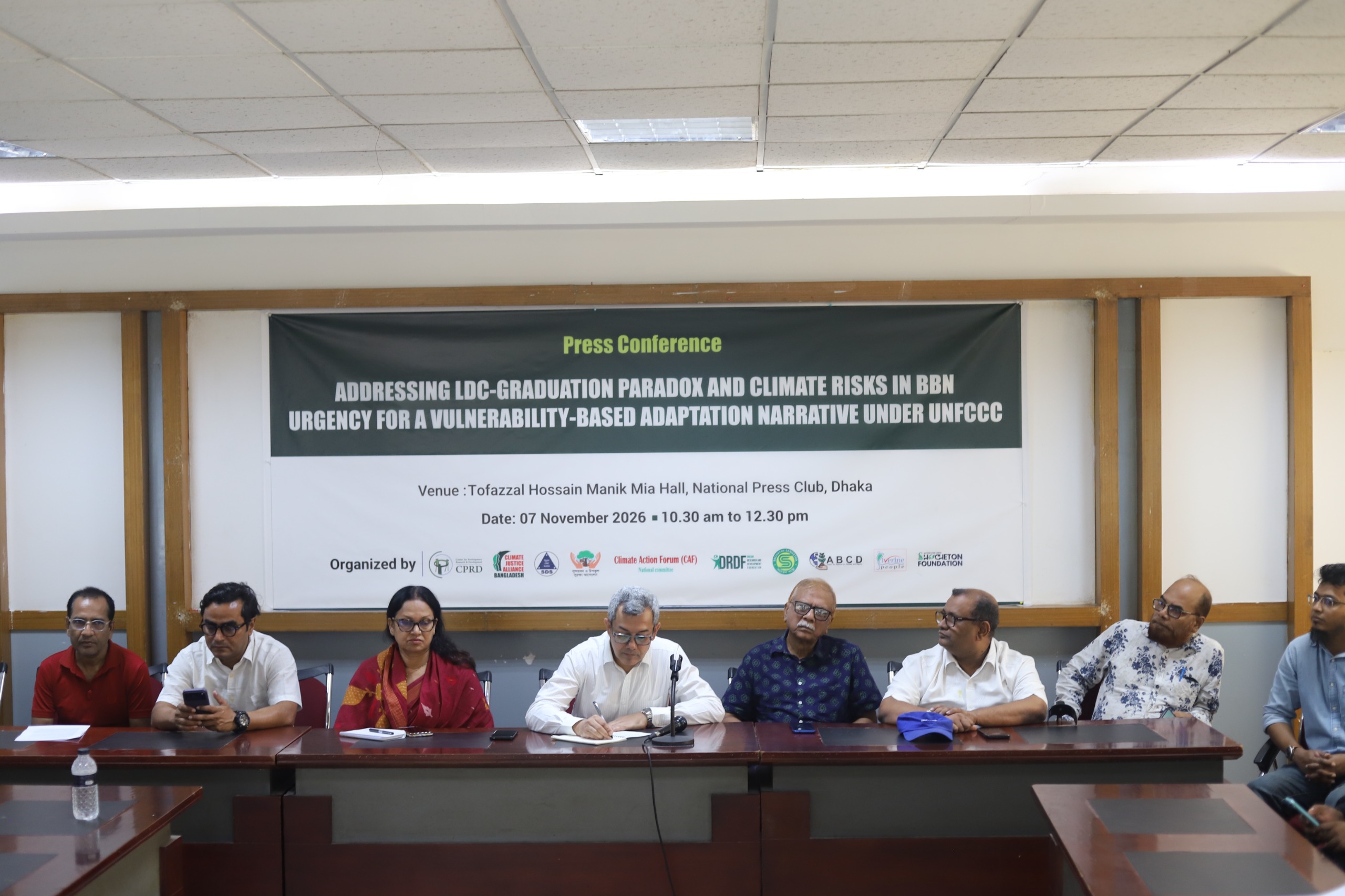
The Climate Justice Alliance- Bangladesh (CJA-B) held a day-long CSOs strategy event titled “COP29 Outcomes and CSOs Engagement Strategy” on 23rd December 2024 at the Nascent Gardenia in Baridhara, Dhaka. Led by Center for Participatory Research and Development- CPRD and supported by Islamic Relief Bangladesh, the event aimed at discussing the outcomes derived from the recently concluded COP 29 and strategize CSOs future actions.
A critical analysis of the COP29 key outcomes on the key agendas was presented by the CPRD research team, highlighting the major decisions adopted at the COP29 and the loopholes and challenges they contain. Pointing out the annual NCQG of $300 billion by 2035 and the aspiration of scaling it up to $1.3 trillion by the same time, the presenters castigated the decision for the goal is arbitrary, promotes debt and other neoliberal financial instruments, bypasses the urgency of grants and highly concessional finances that are new and additional. They also exposed the tricky texts harboring possible conditionalities on adaptation beside mentioning the procedural advancements thereon. They explained how COP29 spoiled the momentum created at Dubai COP for ambitious mitigation actions and missed the opportunity to guide ramping up the mitigation targets in the upcoming NDC-3. Furthermore, mentioning finalization of the carbon market rules as a remarkable step, they critically explicated the gaps and loopholes in the rules, i.e., issues with accountability, durability standard for carbon removals, unchecked entry of CDM projects, etc., which risk undermining the output of the carbon market. Overall, instead of contributing to advancing climate actions, the COP29 decisions have dampened the spirit of climate actions by introducing inadequate and faulty measures.
Dr. Husna Parvin Ahmad, OBE, CEO of Global One, emphasized the critical need for neo-radical collaboration among diverse stakeholders in climate discussions. She highlighted the importance of fostering stronger connectivity among key actors, including NGOs, CSOs, academia, the private sector, and government entities, to amplify the collective voice for climate justice. Dr. Ahmad also underscored the role of individual responsibility in securing a sustainable environment for future generations.
The discussions were facilitated by CPRD Chief Executive Mr. Md Shamsuddoha, with representatives from the CJA-B member organizations actively contributing to the discussions. The participants raised concerns about the prevailing trend of prioritizing mitigation efforts while compromising adaptation, stressing the need for a more balanced approach. They echoed the importance of a collaborative strategy to strengthen positions in both national and global climate negotiations. To reestablish the primacy of adaptation in the national policies and actions, CJA-B decided to organize a 3-day National Adaptation Dialogue in mid-2025, intended to deliver a comprehensive strategy and action towards COP30 and beyond that.