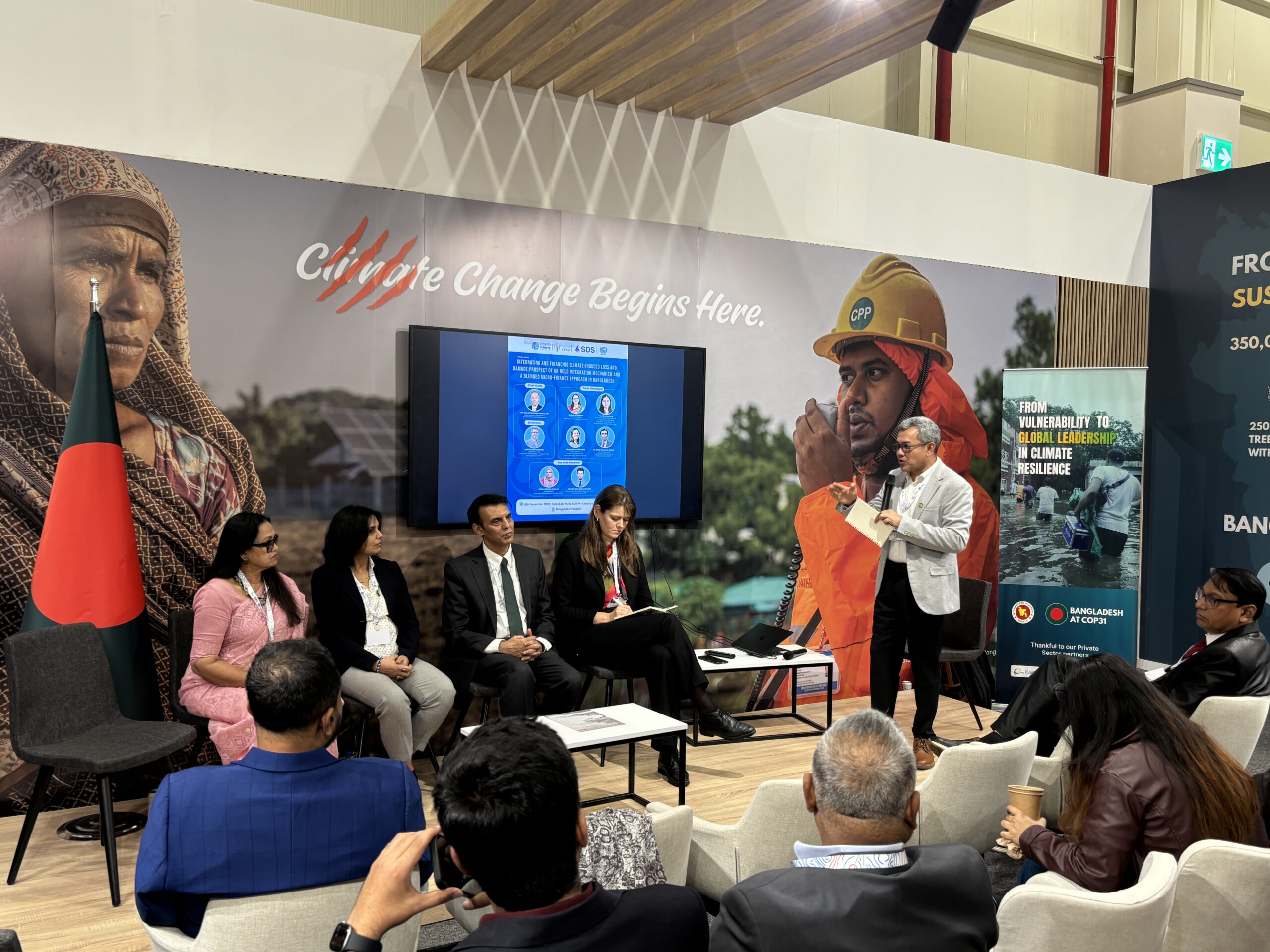
Bangladesh, despite notable strides in building climate resilience, faces escalating challenges from climate change impacts, including flooding, water source depletion, rising sea levels, and salinity intrusion. COP28 in Dubai marked a significant milestone with pledges exceeding USD 600 million for a Loss and Damage Fund. However, concerns linger regarding the fund’s size and accessibility, prompting Bangladeshi experts to scrutinize its adequacy at an event hosted by the Bangladesh Pavilion.
Saber H. Chowdhury, the special envoy to the Prime Minister of Bangladesh for Climate Change, acknowledges the country’s vulnerability due to its geographical position. He expresses hope in the establishment of a loss and damage mechanism at COP28, citing the allocation of over 600 million USD within 12 months as a positive but initial step. Bangladesh aims to proactively access and efficiently utilize these funds, drawing upon its wealth of experience in adaptation.
Despite Bangladesh’s ambitious climate policies, including the National Adaptation Plan (NAP), Nationally Determined Contributions (NDC), and the Mujib Climate Prosperity Plan (MCPP), challenges persist in effectively addressing loss and damage. Experts stress the need for separate policies targeting loss and damage specifically, citing challenges such as limited funding, coordination issues, and inadequate transparency mechanisms affecting their utilization.
A crucial aspect highlighted is the establishment of a National Mechanism for loss and damage. This mechanism is viewed as essential, requiring improved transparency and accountability structures. Inclusive institutions and governance are emphasized for their success, involving various government entities such as the Planning Commission, Ministry of Finance, and Ministry of Women and Children Affairs (MoWCA).
The global dynamics and governance issues are brought into focus, with Md. Shamsuddoha, Chief Executive of the Center for Participatory Research and Development (CPRD), emphasizes addressing global governance gaps to prevent debt burden for countries like Bangladesh. He had put a stress on mobilizing funds from multi-actor partners, including the private sector, financial institutions, NGOs, and local organizations. A shift towards sectoral budgets is recommended for more targeted resource allocation. In essence, the challenges faced by Bangladesh in addressing loss and damage from climate change are underscored, along with the initiatives and concerns raised during COP28. The nation’s proactive stance, coupled with the emphasis on a robust national mechanism and inclusive governance, reflects a multifaceted approach to tackling the complex issue of climate-induced loss and damage.