Center for Participatory Research and Development – CPRD, supported by Christian Aid Bangladesh, held a national seminar on 12 August 2025 at BRAC Centre Inn, Mohakhali, titled “Women’s Role in Transformational Adaptation to Climate Change: Gaps and Challenges.” The event shared findings from a detailed study in Kurigram district and brought together policymakers, researchers, practitioners, and advocates to advance gender-responsive climate action.
The study, grounded in the Sustainable Livelihoods Framework (SLF), examined how women’s adaptive capacity is shaped by their access to various forms of capital- human, social, financial, physical, and natural- and how these are constrained by climate shocks, socio-cultural barriers, and institutional limitations. The findings are based on intensive fieldwork in Rowmari and Char Rajibpur upazilas of Kurigram district, where communities frequently face climatic hazards such as floods, droughts, and riverbank erosion. The region is marked by high poverty rates, limited infrastructure, and restricted access to essential services. Despite these challenges, women in these areas play a critical role in managing household resilience through farming, livestock rearing, food preservation, and informal group initiatives.
Md Shamsuddoha, Chief Executive of CPRD, opened the seminar underscoring the multifaceted impacts of climate change, from rapid disasters like floods to slow-onset challenges such as drought, that disproportionately affect rural women. He highlighted the gap between policy and practice caused by weak implementation, political turnover, and capacity deficits at the local level.
Sumaiya Binte Anwar, Program Manager – Research and Advocacy, alongside Research Officers Rai Dhar and H.M. Rayhanul Islam, presented the study’s findings. Using the Sustainable Livelihoods Framework, they revealed how women’s adaptive capacity in Kurigram is constrained by unequal access to financial, social, human, physical, and natural capitals, compounded by restrictive gender norms and institutional barriers.
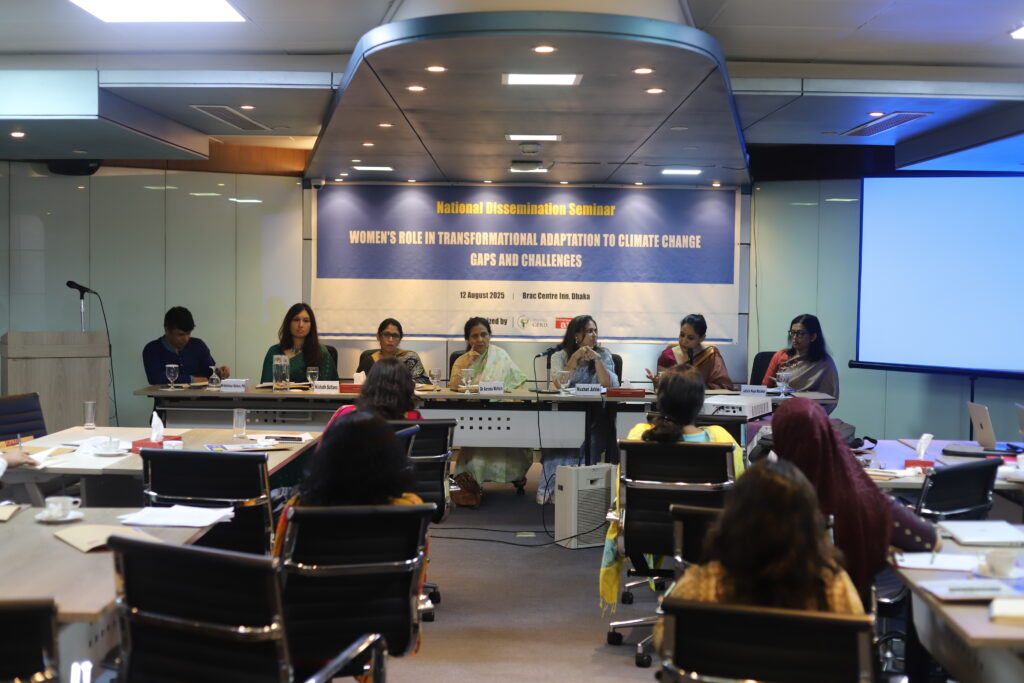
A panel moderated by Nuzhat Jabin, Country Director of Christian Aid Bangladesh, featured insights from Nishath Sultana, Director – Influencing, Campaign & Communications, Plan International Bangladesh; Md Mokhlesur Rahman, PhD, Managing Director and Lead Consultant, Center for Research and Development; Sharmin Islam, Gender Team Leader, UNDP Bangladesh; Juliate Keya Malakar, Executive Director, Christian Commission for Development in Bangladesh; and Dr Tania Haque, Professor, Department of Women & Gender Studies, University of Dhaka. The discussion highlighted challenges such as the limited impact of microcredit loans, the lack of women’s formal recognition as farmers, and the urgent need for gender-responsive budgeting and local adaptation finance. Panelists called for transformative shifts in social mindsets, emphasizing that dismantling patriarchal norms benefits both women and men.
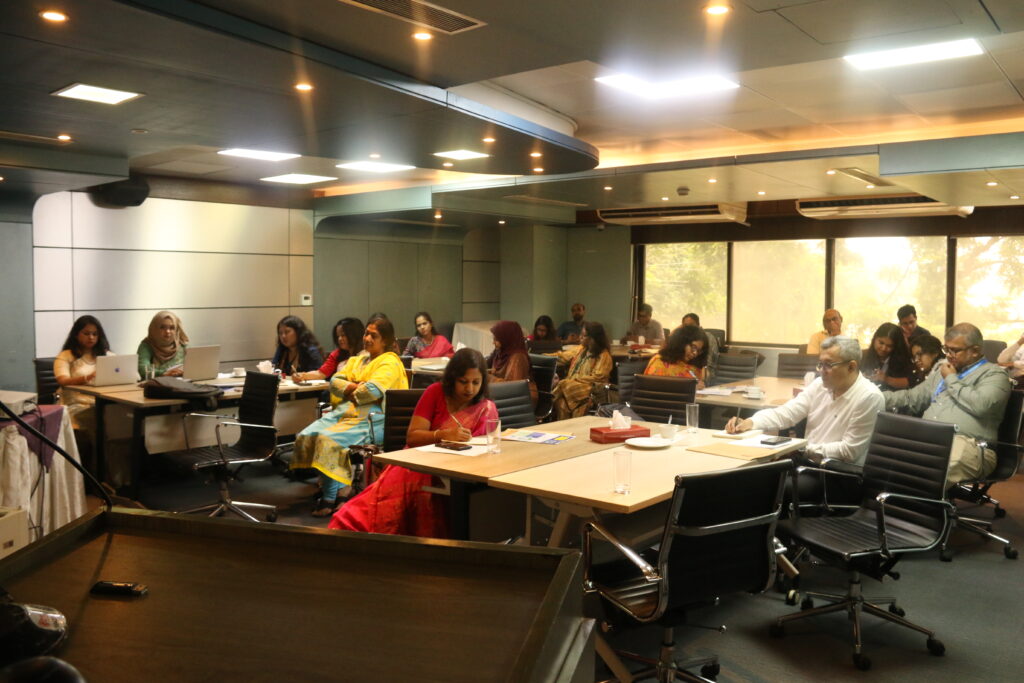
The seminar brought together a diverse group of stakeholders, including international and national NGOs, academics and researchers, donors and private sector representatives, media, and advocacy groups. Participants echoed the importance of institutionalizing women’s participation in decision-making processes across all levels to ensure their perspectives and needs are adequately represented. They emphasized supporting intersectional approaches that address the needs of disabled individuals, indigenous groups, adolescents, and female-headed households will ensure comprehensive support for all women, contributing to a more equitable and sustainable future.
Closing the event, special guest Dr Amena Mohsin, former Professor of International Relations at Dhaka University, underlined that decolonization, demasculinization, and decentralization is a must for climate justice. She urged moving beyond binary gender frameworks and adopting bottom-up, community-led approaches while recognizing the complexity of empowerment in diverse local contexts. This seminar marked a significant step toward bridging policy and practice gaps, amplifying rural women’s voices, and advancing gender-transformative climate adaptation in Bangladesh.