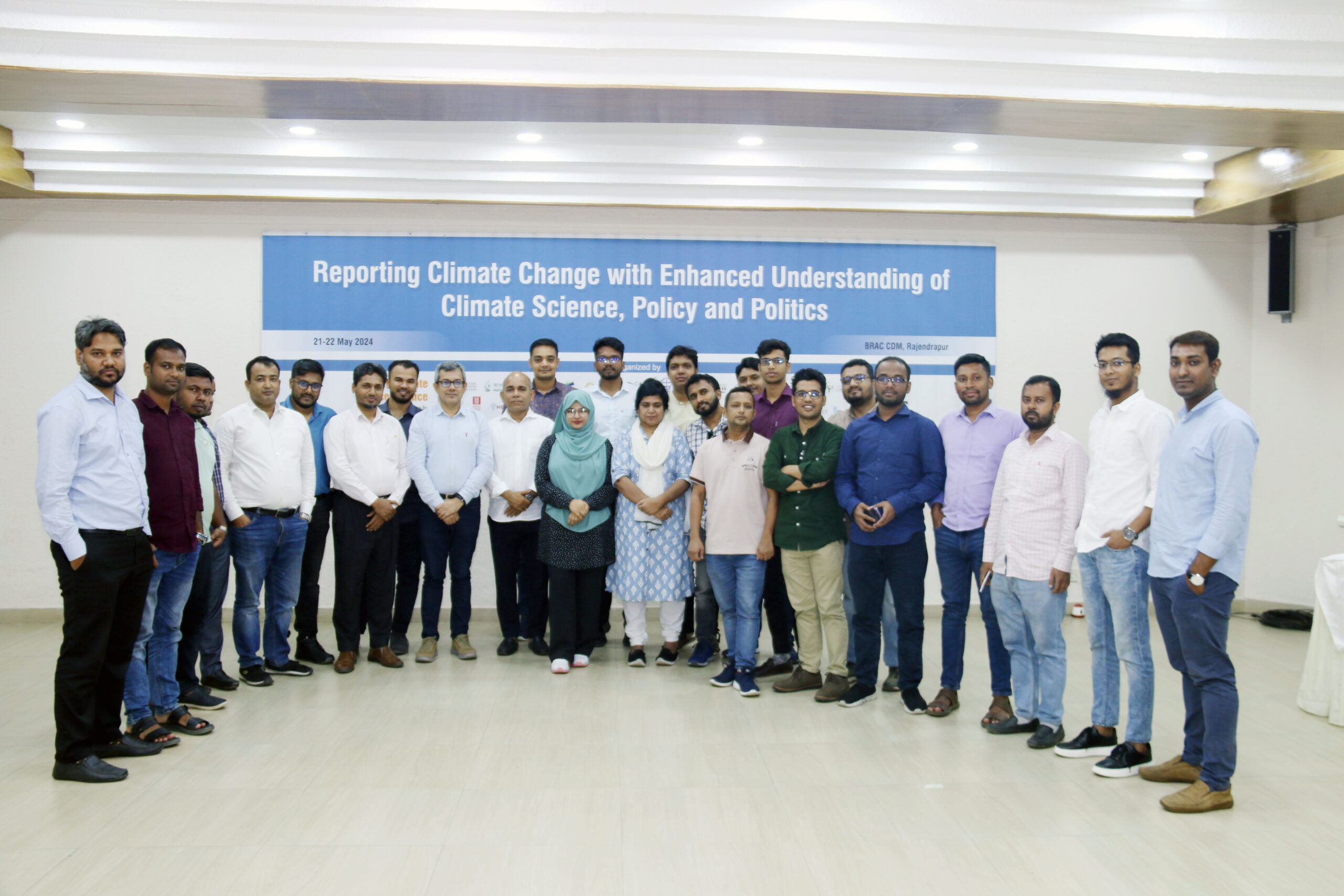
Climate Justice Alliance Bangladesh (CJA-B)— represented by 35 national and international NGOs and CSOs— carried out a two-day capacity building workshop for the media professionals of Bangladesh. Organized at BRAC CDM, Rajendrapur, Gazipur on 21-22 May 2024, the event aimed at establishing a well-versed media group on climate issues and leveraging their potential for effectively influencing wider policy stakeholders towards establishing climate justice.
The workshop discussed a range of issues encompassing the science of climate change and its impacts, climate negotiation process, strategies and methodologies of climate reporting, and so forth.
In the first session, Mr. Mohammed Mofizur Rahman, a Scientist at the Potsdam Institute for Climate Impact Research (PIK), Germany explained the evident science behind climate change. Pointing to the reality that no development is possible without emitting carbon, Mr. Rahman stressed the importance of individual-level responsibility and behavioral change for curbing GHG emissions and thereby reducing the impact of climate change.
Subsequently, Ms. Shanjia Shams, Research Officer at CPRD, conducted a session explaining how human activities have aggravated the change in climate over time, how human rights are violated by climate at different dimensions and how humans respond to it by adopting policies and actions. Exemplifying some of the CPRD’s studies, she corroborated how climate-sensitive risks are disproportionately felt by the most vulnerable community such as women, children, ethnic minorities, poor communities, migrants or displaced persons, older populations, and the like.
Mr. Shahnawaz Whara, Regional Climate and Resilience Advocacy Manager (Asia) at Practical Action, described the history and current scenario of loss and damage in climate change discussion and negotiation. Describing how climate change-induced slow and rapid onset hazards end up in loss and damage in climate-vulnerable countries like Bangladesh, he expressed that the lack of adequate data has been a major hindrance for Bangladesh in global negotiation. Having said that, he suggested some sectors that the recently developed Loss and Damage Fund could support.
Mr. Sheikh Nur Ataya Rabbi, Assistant Research & Advocacy Manager at CPRD, discussed one of the major pillars of the international climate negotiation— ‘Adaptation’. He delved deep into the existing adaptation gap and the country status of Bangladesh on that. He elaborated the fundamentals of Bangladesh National Adaptation Plan 2023-2050 which offers a viable path to reduced climate risks and vulnerabilities and climate-resilient development.
Chief Executive of CPRD, Mr. Shamsuddoha expounded how climate change does injustice to the less-emitting countries. He argues that exploitation from the developed countries is still active in different terms. Detailing out the fundamentals of climate negotiations in global platform, he explained how the matters relating to finance are dealt and what are the areas to improve. The justice-based principles of the UN Convention of Climate Change (UNFCCC) have deliberately been ignored by the developed country Parties since the post-Paris COP negotiation, Mr. Shamsuddoha argued.
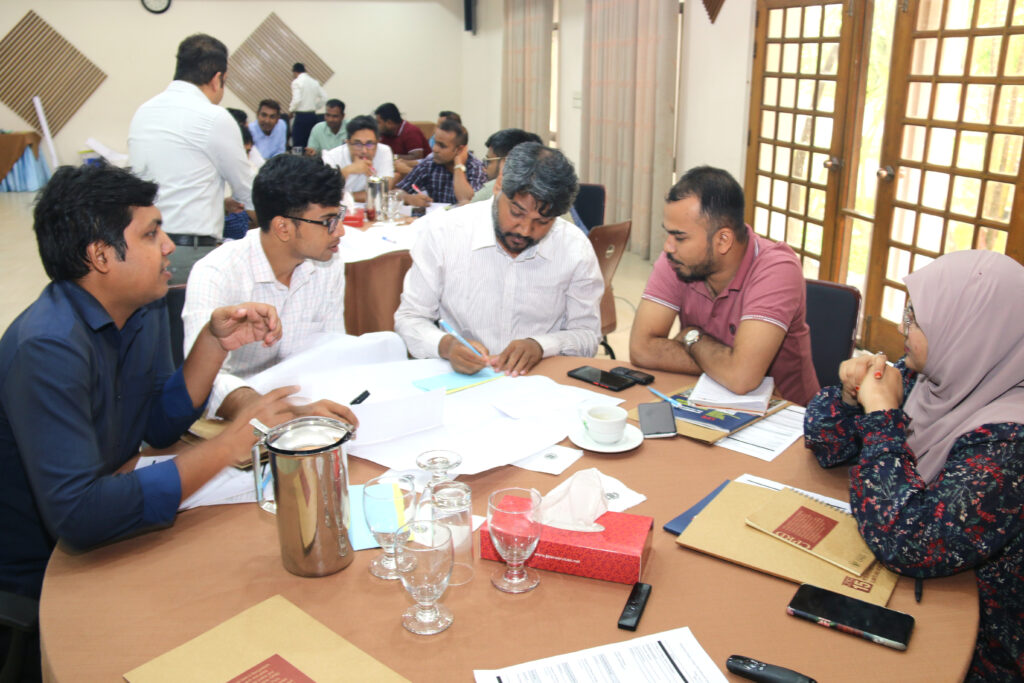
Finally, Mr. Shamsuddin Illius, Chittagong Bureau Chief, The Business Standard, presented some ways to pitch a climate story. He showed with examples some scopes of media portals to collaborate with. He emphasized updating climatic knowledge and pitching stories to a global audience. He conducted an interactive session requiring the participants to answer a set of questions with their experience and ideas for climate reporting. Attendees collectively reflected on the role of the media and brainstormed future scopes and strategies in a constructive discussion. The debate gained from the workshop is anticipated to bridge the knowledge gap among stakeholders and promote sustainable practices and policies that have the potential to make a tangible difference in the ongoing battle against the impacts of climate change.
Mr. Shamsuddoha concluded the workshop with vote of thanks and expressed his hope to continue the collaboration with the media stakeholders to hone the climate advocacy.